
Building Stronger Communities, Together: Reflections from Our Patient Affordability Roundtable
Editor's Note: This article was originally published on April 10, 2026, by Lupus Colorado and is republished here with permission. The Patient Affordability Roundtable discussed in this piece was hosted in partnership with Community Access National Network. Lupus Colorado, led by CEO Kristy Kibler, works to improve the lives of people affected by lupus through advocacy, education, and support services across Colorado. Their work on patient affordability, community building, and state-level policy advocacy strengthens the broader chronic disease patient community that CANN serves. To learn more about Lupus Colorado or donate to support their work, visit LupusColorado.org.
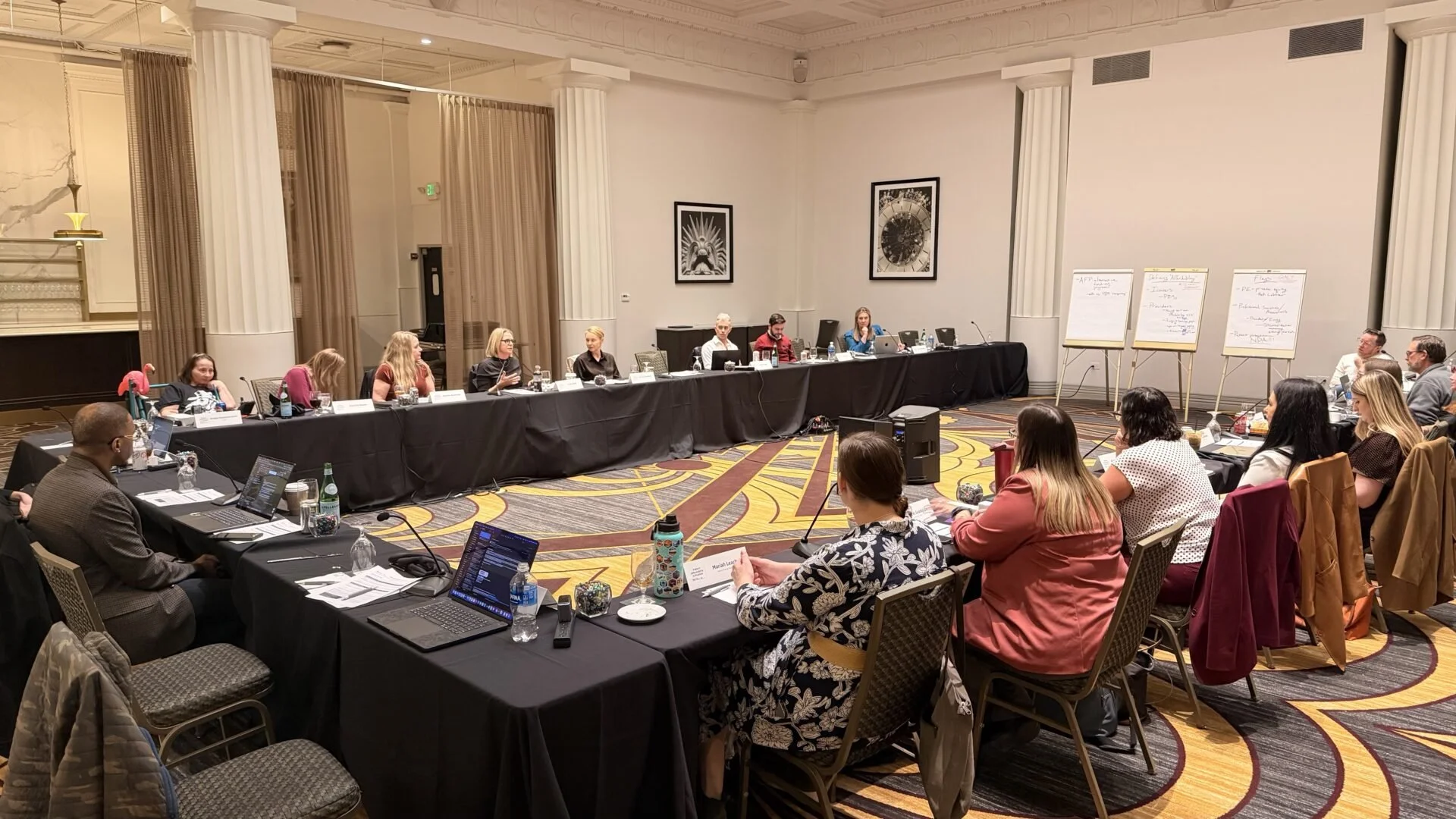
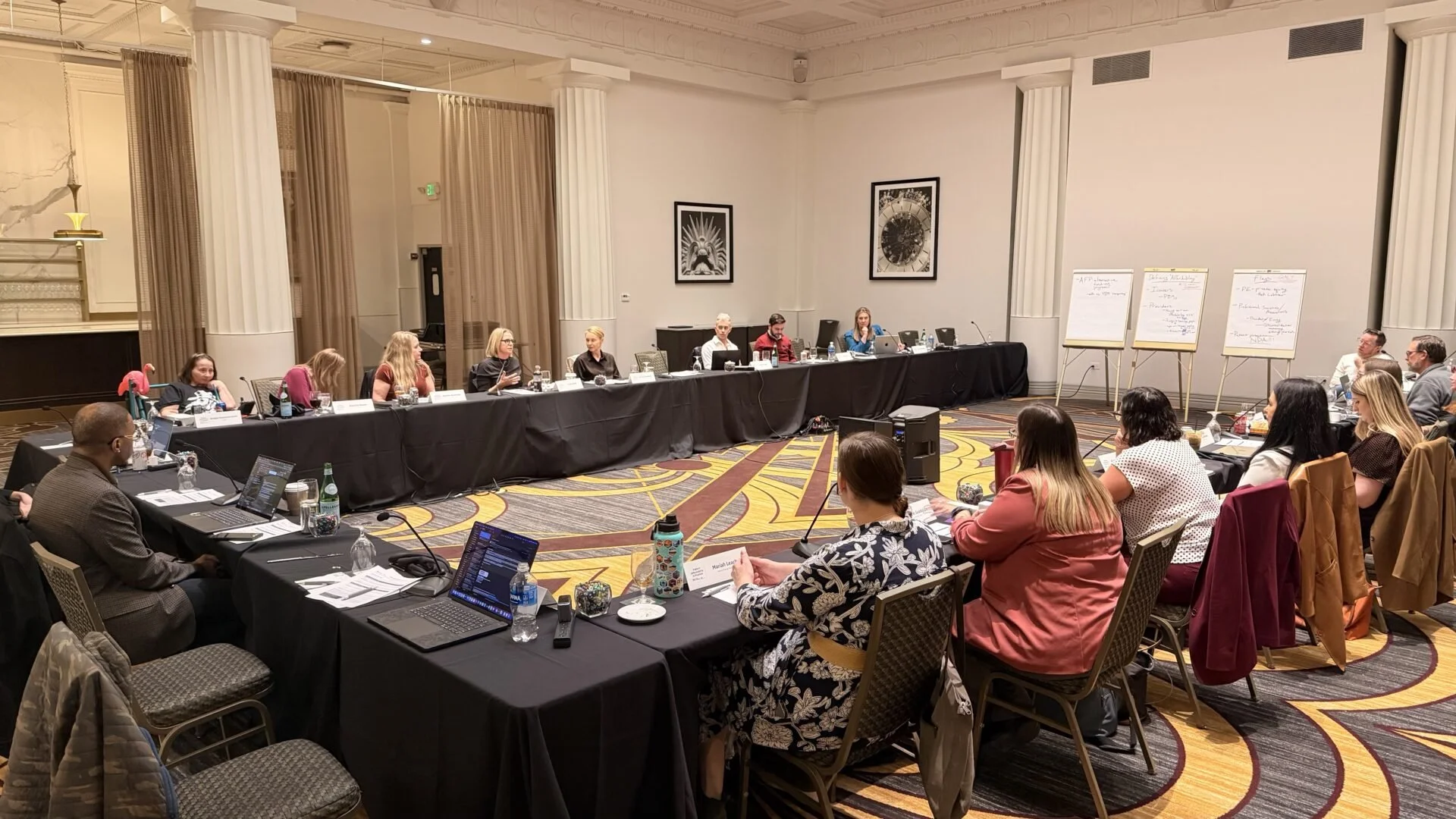
Patient advocates and community organization leaders from across the country convene at the Patient Affordability Roundtable, hosted by Lupus Colorado in partnership with Community Access National Network.
At Lupus Colorado, we know that real progress happens when people come together, share openly, and commit to lifting one another up. That spirit was fully alive at our recent Patient Affordability Roundtable, hosted in partnership with Community Access National Network. This gathering brought together a powerful group of advocates and organizations, including End of Endo Project, Mamas Facing Forward, Chronically Informed, ACT NOW, CF United, Chronic Care Collaborative, Michigan Lupus Foundation, National Bleeding Disorders Foundation- CO and Colorado Patients Taking Action.
Centering Community as a Strategy
One of the most meaningful threads throughout the roundtable was a deep and intentional conversation about community building, not just as a value, but as a strategy for change.
We had the opportunity to dig deeper into what it truly takes to build and sustain a strong, effective community. At Lupus Colorado, we see every day that investing in people drives lasting change. Our ongoing collaboration with partners like ACT NOW, CF United, and Chronic Care Collaborative reflects a shared commitment to trust, connection, and leadership that strengthens the entire ecosystem. When we intentionally support one another and follow through on that investment, individuals step forward not just to participate, but to lead, advocate, and create meaningful change for their communities.
That insight carried throughout the conversation. Community is not built overnight. It is cultivated through consistency, care, and a willingness to grow together.
A Deeper Look at Affordability and Who It Impacts
Building on that foundation, the group explored one of the most important questions in our work: how we define affordability.
Too often, systems are designed around averages, what works for a typical patient. But in our communities, especially among those living with complex, chronic conditions like lupus, there is no such thing as typical.
We discussed the distinction between common and complex patient experiences and how policies that appear effective on paper can fall short when applied to real lives. This conversation reinforced a shared understanding that affordability must reflect lived experience, not simplified models.
Learning Across State Lines
These conversations naturally expanded into a broader exchange of ideas across states.
While each state operates within its own policy landscape, many of the challenges we face are deeply aligned. From patient protections to reimbursement policy and affordability frameworks, participants shared both barriers and promising approaches.
There is real momentum in learning from one another. Every insight shared strengthens our collective ability to advocate more effectively and to bring forward solutions that are grounded in both policy and lived experience.
Policy Conversations That Matter
With that shared understanding, the roundtable created space for focused, solutions-oriented policy discussion.
We explored key issues including PDAB reform, concerns related to QALYs, PBM loopholes, and fiduciary responsibility, along with the importance of rebate pass through, stronger patient protections, and oversight of Alternative Funding Programs to ensure patients are not unintentionally burdened. The conversation also emphasized the importance of building informed legislative champions who can advance patient-centered solutions.
Honoring the Patient Voice
Equally important was an honest conversation about the human side of advocacy.
For many individuals, participating in the legislative process means revisiting deeply personal experiences. We acknowledged the reality of re-traumatization and the responsibility we share to create spaces that are not only impactful, but also supportive.
Advocacy should empower, not exhaust. As a community, we are committed to elevating patient voices in ways that also protect and support those who share their stories.
Moving Forward, Together
What emerged from this convening was more than a list of challenges. It was a shared sense of direction and a renewed commitment to working together.
We move forward with stronger relationships, new ideas, and deeper alignment around how to create meaningful change. By continuing to invest in our community, elevate patient voices, and collaborate with partners across the country, we are building a future where access, affordability, and dignity are not aspirations, but expectations.
Together, we are shaping systems that work better, care deeper, and reach further. And that is where real progress begins.
The Only Thing That Stays The Same… Welcome to 2026
I want to personally thank those of you who joined me in finishing the sentence that is this week’s blog title.
For CANN and many of our colleagues and partners, 2025 was indeed the year of significant change. From government institutions being shook to their core—a near unprecedented challenge to our societal agreements on “fact”—to our dedication to issues and community through education and growth, who we are today is not who we were on January 1, 2025. And, despite what reflection of harder and more stressful moments might tell us, that change is not necessarily a bad thing.
2026 greets CANN, as an organization, with our own evolution: even as we seek to evolve the policy landscape and our partners to be patient-focused in an ever-increasingly tangible way.
CANN’s growth means permanent work for some of our contractors, allowing for incredible investments in three astounding individuals and their continued development as trend setters and thought leaders. Along with conversion to employee status, Ranier and Kalvin’s roles are expanding to leverage their state-based successes and networks to include federal policy education and advocacy. Travis’s expanded position will find him focused on ensuring CANN’s image is uniform, polished, and properly presented to the world at large. Our friends at Perry Communications are continuing as collaborators in shaping the advocacy ecosystem as patient-driven without fear or favor to the influences impacting access to care.
Our community investments are also growing and evolving in exciting ways. Later this year, CANN will share details on our re-vamped Community Roundtable events and how the “PDAB Summit” will transform into a broader conversation on patient access, drug pricing, and necessary reform and regulation. This discourse will offer real solutions that serve patients rather than simply catering to the next round of shady middlemen or market manipulating investors.
Growth and change is never all easy. The nature of evolution often demands the…unfamiliar.
After twelve years of service to CANN, Brandon Macsata will be moving on to focus on his work with ADAP Advocacy and PlusInc. After coming on to assist CANN’s founder, Bill Arnold, with restructuring the organization in 2014, Brandon continued to shepherd the organization through Bill’s death, including recommending me to the Board as successor CEO. Brandon’s contributions to CANN are immeasurable and we’re grateful for his care in helping us get to here.
This year is CANN’s 30th anniversary and much like any person turning thirty years old, we’ve been steadily evaluating our role, our knowledge, and our power to positively effect change. In 2025, we issued four $10,000, low-barrier advocacy grants to state-based and national partner organizations working on our shared issues from different perspectives. These organizations, Lupus Colorado, Aging and HIV Institute, Pharmacists United for Truth and Transparency, and Epilepsy Alliance of Louisiana, share our mission to define the issues impacting patient access to care across all health conditions and regardless of a patient’s socio-economic status, race, sex or gender, religion, geography, or their health history. We learned from these organizations about services they offer, treatment development pipelines, perspectives on navigating care coverage across programs, challenges in keeping local pharmacy doors open, and how providers, even in schools, can refuse to administer life-saving medication to a child experiencing a seizure simply because they are uncomfortable with the medication determined to be the standard of care. We shared our perspectives on messaging and leveraged our experience in HIV exceptionalism to navigate policy change and demand equitable care for our shared communities.
Because the reality is that HIV is losing its exceptional nature in the policy realm. While our programs remain alive—and, frankly, as of yet still funded—our support systems and our integration into broader, more generalized care as a manner of ensuring actual access for people living with HIV (those systems and changes for which we’ve advocated), are under threat by short-sighted, single-issue discussions. Advocacy organizations who have collected money over the years without innovation or growth will continue to labor without producing results and at the expense of true change-makers. Those who expect to proceed according to their own status quo, mired in bureaucracy, the successes of the past, and without authentic coalition-building will atrophy. Again, that’s authentic coalition-building: as I’ve shared over the years, “we must find friends”. And I don’t mean transactional friends (i.e., “If you sign this letter, I’ll sign yours”), but rather real relationships built in a slower manner that develops attachment without expectation of specific action, and instead deep enough care to show up when a call is made.
This goes beyond our community partners. Our industry partners are facing much the same conversation about the therapeutic areas they invest in and their alliances with advocates. What does it mean to be more than funders? What does it look like to fundamentally transform the patient advocacy ecosystem through stabilizing investments? What does it mean to support incubator models of advocacy? How does this impact or otherwise become integrated into a company’s business model? The answers to these questions are not static and they are far beyond any quarterly stockholder assessment, and our partners know this.
Advocates, for our parts, must be responsive to a rapidly-changing environment where those most confident in their proposed “solutions” are only having half the conversation on a single-issue within a larger web of issues, networked in a complex chain reaction of impacts. The consequences of policymakers—state and federal—suffering from “tunnel vision” or engaging in cheap, inaccurate, and deceptive talking points are manifesting in readily foreseeable conflicts making their way through expensive and unnecessary legal battles at the expense of tax dollars and patient quality and affordability of care.
We can do better than this. As HIV advocates, we know how to leverage historical challenges into future successes. We know how to seek out the unforeseeable and to respond to clever callousness. We have an obligation to share this knowledge and empower partners across the country to achieve what we have and, in doing so, to save our own investments from today’s threats.
2026 requires a paradigm shift from institutional comfort to nimble, responsive, powerful advocacy.
The changes 2025 brought us will be the continued challenges of 2026. To which the answer must be “We can.” (…CANN)
How Lupus Colorado and CANN Built an Advocacy Powerhouse
Some partnerships start with a formal strategy session. Ours began with a simple realization. People living with lupus and people living with HIV or viral hepatitis face many of the same obstacles when they try to get the care they need. Once we recognized that shared landscape, the connection between Lupus Colorado and the Community Access National Network (CANN) started to feel not only natural, but necessary.
CANN’s mission is to define, promote, and improve access to healthcare services and supports for people living with HIV and people living with viral hepatitis. The focus is on keeping care affordable and within reach for people no matter where they live, what they earn, or how they are insured. As soon as we spent time together, it was clear how much that mission speaks to the lived reality of people living with lupus. Many in our community depend on the same safety net programs, the same specialty pharmacies, and the same policies that protect medication access for people with chronic conditions nationwide.
Once we began sharing stories, the overlap came into full view. We heard about people living with lupus who rely on the 340B Drug Pricing Program to keep their treatment affordable. We heard about people managing both lupus and other long term conditions who face the same hurdles that people living with HIV or hepatitis encounter when insurance rules change or formularies shift. We also heard how uncertainty about programs like the 340B Program or state efforts to set Upper Payment Limits through bodies like the Colorado Prescription Drug Affordability Board creates stress and confusion for everyone who counts on steady access to treatment. The policy language may sound technical, but the effects show up in daily life. That shared experience became the spark that brought our organizations together.
Lupus Colorado eventually became a kind of testing ground for patient engagement around these issues. When debates surrounding 340B and the state board intensified, we invited our community to learn more and speak up. People living with lupus stepped forward with thoughtful questions about what these changes might mean for their medications and their stability. They shared stories about years spent finding the right treatments. They talked about the worry that comes with not knowing whether a familiar pharmacy or discount program will still be available. Their honesty helped shape a clearer picture of what access really means for people with chronic conditions.
CANN supported this work by offering context, training, and a strong national network. Their experience showed us how these local conversations fit into broader public health goals, including ongoing efforts to build sustainable systems for people living with HIV and long term strategies for hepatitis C elimination. They also helped amplify our stories by connecting them to advocates, policymakers, and public health leaders who are working to protect and expand medication access nationwide.
As we continued working together, the partnership grew into something that felt like friendship and, at times, even family. It surprised all of us how quickly Louisiana and Colorado began to feel connected through shared purpose and shared energy. This work is deeply personal, and when good people come together with the belief that collaboration, not competition, brings out our strongest work, something close to magic begins to take shape. My curiosity and strategic thinking blended naturally with Jen’s mentorship and policy insight. Kalvin and Ranier added necessary context for any variety of issues we shared and even accompanied me to some meetings to ensure Lupus Colorado's interests were well-defined for our audience. Together we created a combination that strengthened every effort that followed.
This collaboration also changed how advocacy feels for many people. Instead of seeing policy as something decided far away, our community began to see it as something they can influence. When people speak about their lives, policymakers listen differently. The technical language becomes human. The stakes become easier to understand. And the entire conversation shifts toward solutions that protect access rather than limit it.
The partnership between Lupus Colorado and CANN has shown us that when organizations connect around shared purpose, everyone benefits. We bring different histories and different areas of expertise, but we are united by our commitment to ensure that people living with chronic conditions can access the care they need without fear or financial hardship. Our collaboration continues to strengthen advocacy networks, uplift patient voices, and support progress toward public health goals that matter to all of us.
Most of all, this partnership reminds us that no one faces this journey alone. When communities work together, even unlikely collaborations can grow into something powerful enough to spark change.