
The Recipe for Change: From Surviving Appointments to Changing Policy
For a long time, I thought advocacy meant surviving the next appointment.
I thought it meant learning how to explain my pain better, how to prepare for another referral visit, how to justify why I was missing work, school, or pieces of my life to something I didn't even understand for so long, while it was reduced to just part of "being a woman." Like many patients with endometriosis, I spent years fighting to be believed before I ever understood how much of that fight was never actually about me — it was about the system itself. That realization changed everything.
Endometriosis is often treated like an isolated women's reproductive issue, but it is one of the clearest examples of systemic failure in the 21st century. Delayed diagnosis, insurance denials, medical gaslighting, lack of ADA recognition, and repeated surgical barriers are not separate problems. They are connected outcomes of the same design failure.
Cases like Virginia OBGYN Dr. Perwaiz from 2021, who was sentenced for needlessly operating on dozens of women, are often discussed as individual scandals. However, they reveal something much larger — when patients are repeatedly dismissed, overtreated, undertreated, or financially trapped, we are not looking at exceptions. We are looking at a pattern. That pattern is expensive.
In the United States alone, endometriosis carries an estimated annual economic burden of $69 to $86 billion. Patients lose an average of 11 hours of productivity every week, with more than six hours from workplace productivity and nearly five from household responsibilities. That means reduced income, missed promotions, family strain, disability use, and careers reshaped by a disease that many providers still misunderstand. Endometriosis does not just take time away from work. It takes time away from living. That is where policy enters, and that is the part most people do not realize.
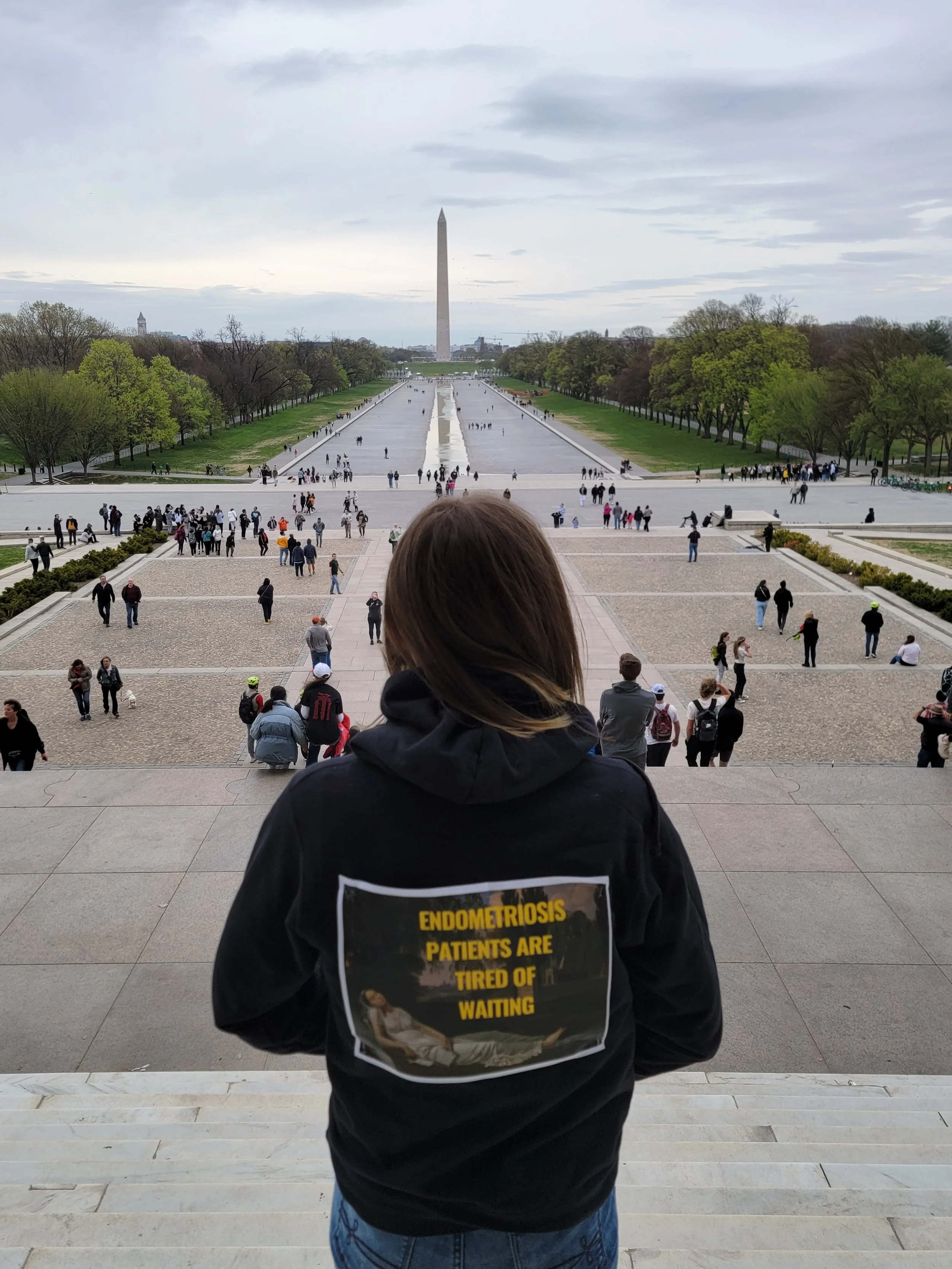
Congress may not perform surgery, but Congress influences whether research gets funded. NIH shapes how the disease is defined and studied. HHS drives oversight and accountability. CMS determines reimbursement structures that decide whether trained specialists can remain accessible. CPT coding through the AMA shapes how complex excision surgery is valued. FDA pathways matter when diagnostics and treatment development are still being built on outdated definitions. Then we have ACOG, which is responsible for surgical and treatment guidelines.
This is where advocacy becomes a civics lesson.
Through the American End of Endo Project, we teach people that advocacy means understanding where decisions are made and how to plug in. Our advocacy workshop says it best — advocacy means knowing who is in the kitchen, what they are cooking, and where you can add your ingredients to make the biggest impact. We walk patients through the three branches of government, how a bill becomes law, how appropriations language works, and why constituents matter. We show them how to find their lawmakers, identify committee assignments, understand representative priorities, and make a clear, direct ask. We also share how to use their lived experience to tie it all together.
Most people assume policy work belongs to lobbyists or large organizations. But some of the most meaningful movements happen because ordinary patients decide to keep showing up.
This past year, our AEEP "Oceans 4" team worked together to help contribute to federal appropriations language recognizing endometriosis as a chronic, systemic, inflammatory disease — not simply a reproductive disorder. That language encourages the NIH to use an updated, evidence-based definition aligned with current scientific understanding and to move research away from outdated narratives that have harmed patients for decades. No lobbyists. No big corporate backing. Just lived experience, and persistence. That is exactly what it was.
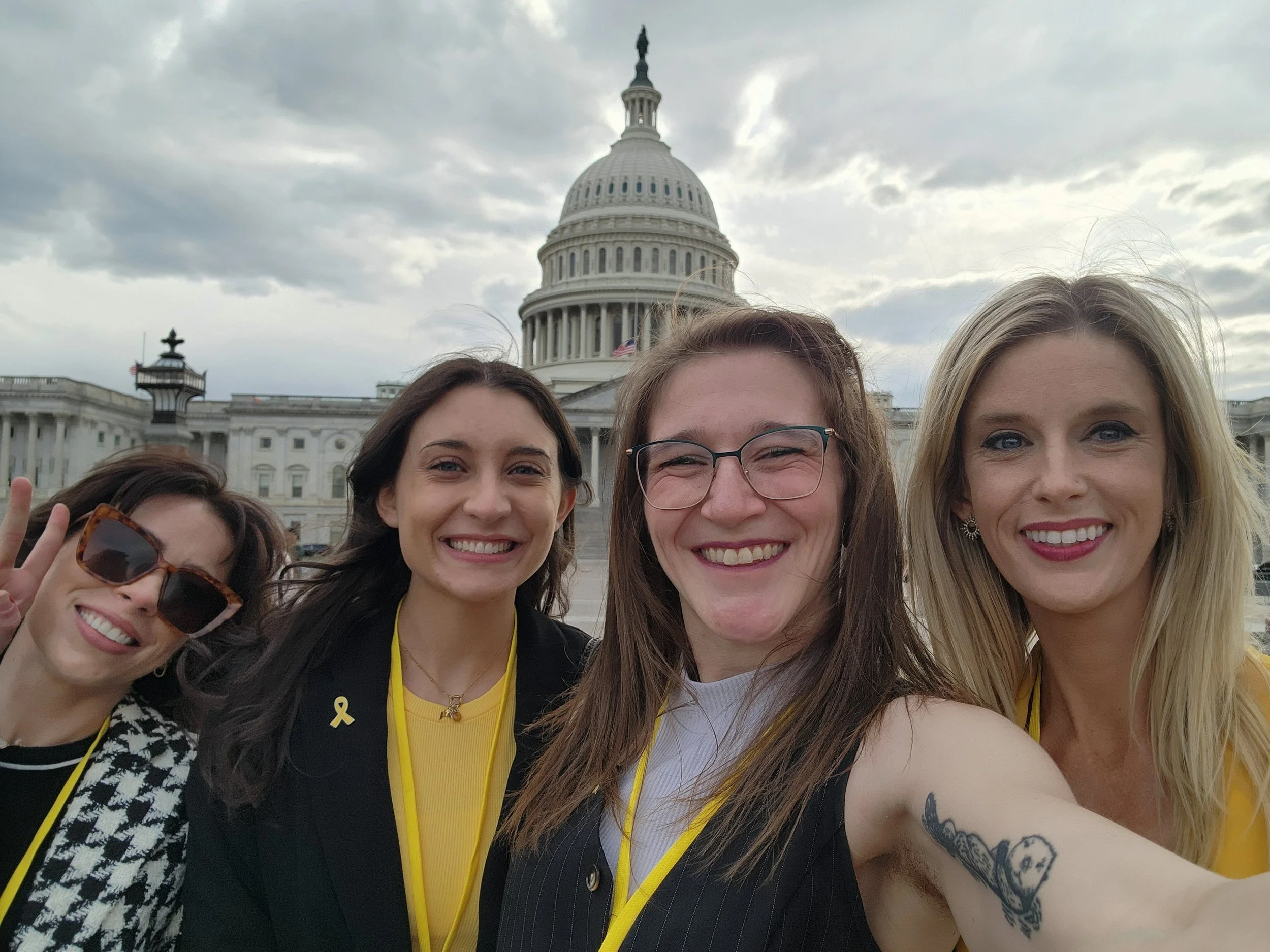
What looks like one paragraph in federal report language was actually months of calls, follow-ups, research, relationship-building, and learning how to communicate inside rooms never built for patient voices. It meant learning which offices mattered, which committee staff shaped decisions, and how appropriations in one place could springboard conversations with HHS, CMS, and broader federal accountability. That is the unique part of this process.
People often ask how I keep all the moving parts straight, and honestly, the answer is that advocacy becomes less overwhelming when you stop seeing it as random and start seeing it as systems working together, like a giant machine. One meeting leads to another. One appropriations request opens a door to reimbursement reform. One state conversation on PBM transparency connects to broader affordability reform. One workshop creates ten new advocates who now know how to speak to their own legislators. That ripple effect matters.
I saw this clearly during roundtable discussions on PBM transparency and patient affordability this March in Denver. Conversations focused heavily on cost, but I brought in the nuance that patients are still being prescribed treatments based on outdated and even falsified data. Too many people are pushed into repeated hormonal suppression, unnecessary hysterectomies, or endless "band-aid" medication cycles because the healthcare system has not caught up to the evidence. The response in the room was simple — things just need to catch up.
Patients do not live in policy timelines. They live in bodies that are expected to function a certain way.
When a six-hour excision surgery performed by a highly trained specialist is reimbursed similarly to a short procedure done by someone without disease-specific training, that is a structural failure. When insurance companies refuse to recognize surgical complexity, patients are forced into out-of-network care, massive financial loss, or dangerous delays. That is why CMS billing reform and CPT coding reforms matter so much. This is also why the battle is not won and has really just begun.
The appropriations language created a foundation, but there is still work ahead — CMS and CPT coding reform, continued HHS collaboration, FDA pathways for diagnostics and treatment development, and broader agency engagement across the federal landscape. We now have abbreviated agencies mapped and active areas of action to pursue. Genuine collaboration creates movement. That is what success looks like in advocacy. Not a single victory, but a structure being built.
For me, the shift happened when I stopped asking, "How do I survive this appointment?" and started asking, "Who controls the system creating this outcome?"
That changed everything.
Sometimes advocacy looks like legislation. Sometimes it looks like a congressional workbook with references. Sometimes it looks like a workshop teaching Civics 101 to patients who never realized they belonged in those rooms. Because they do.
Real change happens when communities rise up. Every story told, every meeting held, and every voice added creates pressure that systems cannot ignore. Endometriosis is not a niche issue. It is a public health issue, an economic issue, and a human issue. It certainly constitutes a public health crisis at this time.
Once patients understand where they can add their seasonings to the ribeye steak to make the most impact — everything starts to change.
How Pharma Can Turn Advocates Into Allies
Governor Ned Lamont's recent visit to ViiV Healthcare's Branford research facility highlighted a missed opportunity that extends far beyond Connecticut's biotech sector. While Gov. Lamont toured laboratories where researchers develop long-acting injectable HIV prevention drugs, the scene raised a compelling question: What if pharmaceutical companies routinely invited advocacy leaders—not just politicians—behind the scenes for plant tours, CEO roundtables, and genuine engagement with the science that drives their work?
This moment arrives at a critical juncture for disease advocacy organizations across therapeutic areas. As federal funding faces unprecedented cuts and advocacy groups struggle for sustainability, the pharmaceutical industry's evolution from traditional grant-maker to authentic community partner offers a transformative model that could reshape how companies support grassroots organizations serving people living with HIV, hepatitis C, lupus, rare diseases, and countless other conditions.
Federal Funding Collapse Creates Cross-Disease Crisis
The Trump Administration's systematic dismantling of federal health programs creates funding gaps that affect advocacy organizations across all disease states. The Centers for Disease Control and Prevention (CDC)'s HIV Prevention Division faces nearly $1 billion in cuts, while the National Institutes of Health (NIH) confronts a 40% reduction in its $3.3 billion HIV research portfolio. Over 200 HIV/AIDS research grants have been terminated since January 2025.
These cuts reverberate beyond HIV advocacy. Chronic disease programs, rare disease research initiatives, and community health grants face similar reductions, leaving advocacy organizations across therapeutic areas scrambling for alternative funding sources. Los Angeles County's 39 HIV organizations received contract termination notices affecting $19 million in CDC funding, a harbinger of what advocacy groups in oncology, autoimmune diseases, and rare conditions could expect.
Industry's $100 Million Evolution
Pharmaceutical companies have been pioneering investments that transcend traditional grant-making, demonstrating innovation in community partnerships that becomes critical as federal funding disappears. ViiV Healthcare's $7.8 million Fund Our Futures pledge, announced in November 2024, exemplifies this shift through their AMP Grant Initiative, where 13 organizations distribute funds to activate over 150 grassroots projects—the first time a pharmaceutical company has empowered communities to make their own funding decisions.
Gilead Sciences leads with $24 million through their Zeroing In program and an additional $12.6 million Setting the P.A.C.E. Initiative serving Black women and girls. Merck's $7 million HIV Care Connect initiative addresses social determinants of health over five years.
These programs demonstrate authentic partnership through direct C-suite executive participation in community dialogues, real influence for community advisory boards on corporate decision-making, and holistic approaches addressing social determinants beyond strict “medical” needs.
A Hard Look at the Two-Tier Funding System
The funding divide between established and grassroots advocacy organizations is stark. amfAR has raised nearly $950 million since 1985, including over $17 million at their 2024 Cannes Gala alone, while the National Minority AIDS Council operates on $5-7 million annually with executive compensation exceeding $400,000.
The reality for smaller organizations is far different. Kristy Kibler, CEO of Lupus Colorado, details the issue: "Small, state level patient groups are drowning in too many programs created to generate funding and need to be more bold in asking for operational support. We can not continue to ask patients and their families to keep these orgs financially afloat."
Warren Alexander O'Meara-Dates, Founder/CEO of The 6:52 Project Foundation, echoes these challenges from the HIV advocacy space: "Without name recognition and measured outcomes for programs, pharma companies often times do not align themselves with us. Additionally, the strict guidelines set in application processes, tend to eliminate our ability to qualify for and/or apply for support."
Pharmaceutical companies contribute to this disparity through their funding patterns. "They often support the two national orgs who do not invest locally or pass along any of that funding which leaves little room in their budgets to support our state level work," Kristy explains. Meanwhile, staffing instability devastates smaller organizations: "We have had two partners eliminate their advocacy teams and leave us without even a contact at their company."
This creates self-reinforcing cycles where established organizations possess infrastructure for complex grant applications and institutional relationships that survive personnel turnover. AIDS United's average grant size of $36,522 often represents a lifeline for smaller entities, but similar micro-funding challenges affect almost all small and upstart advocacy organizations.
Innovation Models Ready for Cross-Disease Application
Sophisticated engagement strategies pioneered in HIV advocacy provide blueprints for other disease areas. European Community Advisory Board meetings bring advocates directly into dialogue with pharmaceutical executives, where community members have real influence on drug development and safety protocols. Bristol Myers Squibb's Global Patient Outreach structure integrates patient voice into all business decisions—a model that spans their oncology and other therapeutic portfolios.
Executive engagement has become central to these partnerships. Carmen Villar, Gilead's VP of ESG and Corporate Citizenship, leads direct dialogue sessions with community leaders, while ViiV executives participate in European advisory meetings where advocates shape corporate strategy. This direct access allows advocacy organizations to influence corporate policies, research priorities, and community investment strategies in real time.
Experiential Investment Over Transactional Charity
The pharmaceutical industry has an unprecedented opportunity to model transformative advocacy investment across all disease states. Rather than simply writing checks, companies should create meaningful engagement opportunities that build advocacy capacity and strengthen community-industry relationships.
Plant tours and research facility visits represent one powerful model. Kristy from Lupus Colorado articulates what advocacy leaders want: "I would want to know what barriers the trials are facing, specifically in the lupus community. It would be helpful to get some education on how their drugs work and why they are novel so that we can help generate excitement and hope in our patients."
Warren from The 6:52 Project emphasizes the importance of understanding pharmaceutical development processes: "What process does new product development go through from concept to market sales. Therein, I would like to learn how much community input is involved during the process."
The value extends beyond education to building trust and credibility. Warren notes that "having access to c-suite executives would benefit my organization because it would allow us to share stories of success and barriers serving marginalized communities in rural areas. Doing so would shape better relationship building with community such that trust of pharma and their intentions could be increased."
Beyond plant tours, pharmaceutical companies can leverage advocacy organizations as strategic resources. "Using us as a resource for trial participants, connection with their sales reps to help us open doors into provider space, co-branded marketing materials," Kristy suggests. Warren emphasizes the credibility factor: "Credibility partnering with a major corporation increases validity of programming offerings for smaller organizations like mine."
The most transformative opportunity lies in giving advocacy organizations real influence over corporate strategy from the beginning. Warren advocates for "including my expertise in developing products for community from conception" rather than "waiting until later in the process." This represents a fundamental shift from charitable giving to authentic partnership.
Forward-thinking pharmaceutical companies should establish advocacy advisory boards that include smaller, state-level organizations across therapeutic areas, not just established national groups. Launch executive mentorship programs pairing pharmaceutical executives with advocacy leaders. Create structured programs bringing advocacy leaders to research facilities and executive meetings. Provide operational support that moves beyond program-specific grants to unrestricted funding that builds organizational capacity.
The convergence of federal funding cuts and industry innovation creates a critical window for establishing alternative advocacy funding ecosystems. Companies that pioneer experiential investment models across disease states will strengthen their community relationships and position themselves as leaders in sustainable public health advocacy.
Imagine a pharmaceutical industry that recognizes the untapped potential in scrappy, nimble advocacy organizations led by people who understand their communities' needs intimately. These creative advocates—like Kristy in Colorado working directly with lupus patients, or Warren serving marginalized communities in rural areas—bring innovation, agility, and authentic community connections that larger legacy organizations often lack. They deserve more than the leftover funding after national organizations take their share.
The pharmaceutical industry has the opportunity to empower and equip these advocates not just with financial resources, but with knowledge, access, and genuine partnership. When companies invest time in plant tours, executive mentorship, and collaborative strategy sessions with smaller advocacy organizations, they tap into a reservoir of community insight and innovative approaches that could transform how medicine reaches the people who need it most. The scrappy organizations working closest to affected communities often have the boldest ideas and the strongest commitment to change—they simply need industry partners willing to see past the polished grant applications of established organizations to recognize the potential of authentic grassroots advocacy.
This moment demands more than transactional charity. It calls for industry to reimagine community investment as true partnership with the advocates who know their communities best.